Heat Pump Installation, Repair & Maintenance in North Alabama
Advanced Service Company LLC provides professional heat pump service, repair, installation, replacement, and maintenance for homes and businesses throughout North Alabama. Heat pumps offer efficient year-round comfort by providing both heating and cooling from one HVAC system.
Call 256-432-7622 Request Heat Pump ServiceEfficient Heating & Cooling from One System
Heat pumps are a popular choice for Alabama homes because they provide cooling in the summer and efficient heating during colder months. When properly sized, installed, and maintained, a heat pump can help improve comfort, reduce energy waste, and provide dependable performance throughout the year.
Our Heat Pump Services Include
- Heat pump repair and troubleshooting
- New heat pump installation
- Heat pump replacement and change-outs
- Heating and cooling maintenance
- Thermostat replacement and setup
- Airflow and ductwork evaluations
- High-efficiency heat pump options
- Mini-split heat pump options
- Second opinions on major component failures
Signs Your Heat Pump May Need Service
Your heat pump may need professional service if it is not heating or cooling properly, making unusual noises, running constantly, freezing up, producing weak airflow, causing uneven temperatures, or increasing your utility bills. Routine maintenance can help keep your heat pump operating safely, efficiently, and reliably.
Heat Pump Replacement & High-Efficiency Options
If your heat pump is older, inefficient, unreliable, or facing a major repair, replacement may be the better long-term solution. Advanced Service Company LLC offers free estimates on new and change-out HVAC systems and can help you compare energy-efficient heat pump options based on your home, comfort needs, system size, and budget.
Schedule Heat Pump Service Today
Need
Text: 256-432-7622
Website: www.allasc.com
EMail: [email protected]
Address: 2099 New Center Road - Lot C, Somerville, AL 35670
Areas We Serve
We provide heat pump installation, service, and repair throughout North Alabama, including:
- Somerville, AL
- Decatur, AL
- Huntsville, AL
- Athens, AL
- Madison, AL
- Hartselle, AL
- Priceville, AL
- Trinity, AL
- Tanner, AL
- Harvest, AL
- Hazel Green, AL
- Limestone County, AL
- Morgan County, AL
Why Choose Advanced Service Company LLC?
- ESCO Heat Pump Trained & Certified
- Serving North Alabama since 2008
- Licensed, bonded, and insured HVAC contractor
- Residential and commercial HVAC experience
- Professional heat pump repair, installation, replacement, and maintenance
- Free estimates on new and change-out HVAC systems
- Second opinions on major component failures
- Financing options available for qualified customers
Heat Pump FAQs
Do heat pumps provide both heating and cooling?
Yes. Heat pumps provide cooling during warm weather and heating during cooler weather, making them a year-round comfort solution.
Do you repair heat pumps?
Yes. Advanced Service Company LLC provides heat pump repair, troubleshooting, maintenance, replacement, and installation services.
When should I replace my heat pump?
Replacement may be recommended if the system is older, inefficient, frequently breaking down, unable to maintain comfort, or facing a major repair.
Do you offer free estimates on heat pump replacement?
Yes. We offer free estimates on new and change-out HVAC systems, including energy-efficient heat pump replacement options.
About Heat Pumps
Heat pumps are a highly efficient and versatile option for heating and cooling homes and businesses. Unlike traditional HVAC systems that generate heat, heat pumps work by transferring heat from one place to another. During warmer months, a heat pump removes heat from inside the building and transfers it outdoors, functioning like an air conditioner. In colder months, it reverses the process by extracting heat from the outside air and bringing it indoors to provide warmth. This ability to both heat and cool makes heat pumps an all-in-one comfort solution.
One of the biggest advantages of heat pumps is their energy efficiency. Because they move heat rather than create it, they can deliver more energy than they consume, especially in moderate climates. This can lead to lower utility bills compared to traditional heating systems such as electric resistance heaters or older furnaces. Modern heat pumps are designed to operate efficiently even in colder temperatures, making them a practical option for many regions.
Heat pumps also provide consistent comfort and improved indoor air quality. They typically run longer cycles at lower output levels, which helps maintain more stable indoor temperatures and reduces hot and cold spots throughout a building. Many systems also include advanced filtration and humidity control features, which can help improve indoor air quality and overall comfort.
Another benefit of heat pumps is their environmental friendliness. Since they rely on electricity and transfer heat instead of burning fuel, they produce fewer greenhouse gas emissions compared to gas or oil heating systems. This makes them a more sustainable option for homeowners and businesses looking to reduce their environmental impact while maintaining reliable indoor comfort.
Proper installation and regular maintenance are key to getting the most out of a heat pump system. A correctly sized and professionally installed unit will operate more efficiently and last longer. Routine maintenance—such as cleaning coils, checking refrigerant levels, and inspecting electrical components—helps ensure optimal performance and prevents unexpected breakdowns. With the right system and proper care, heat pumps can provide efficient, year-round comfort for many years.
Different Types of Heat Pumps
Air-Source Heat Pump (ASHP)
An air-source heat pump uses air as a heat-transfer medium. In heating mode, the system removes heat from the outside ambient air. Heat pumps can actually remove heat from the air down to absolute zero, which is −459.67°F. The lower the air temperature, the less efficient the system is. Most systems in the south are setup to use additional auxiliary heat sources when the temperature is around 35°F; or lower. Most energy-efficient systems are utilized with a calculated balance point of the structure that is being heated. The balance point let's us know when the system will need additional auxiliary heat. To make the system more efficient, a thermostat with an outdoor temperature sensor can be utilized to prevent the auxialiary heat from being activated if the outside temperature is above the balance point. Air-source heat pumps typically have an efficiency of 175% to 250% more versus electric resistance heating.
Operation of the Heat Pump in Cooling Mode
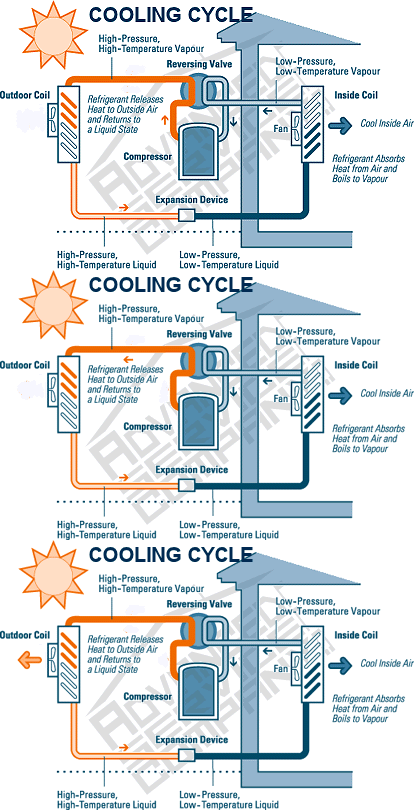
The Heat Pump operates normally in Cooling Mode as a normal air-conditioner. The Heat Pump uses the indoor coil as an evaporator and the outdoor coil as a condenser in the Cooling Mode. The reversing valve is energized or de-energized based on the manufacturers specification to direct the flow of refrigerant to the appropriate coils.
Operation of the Heat Pump in Heating Mode
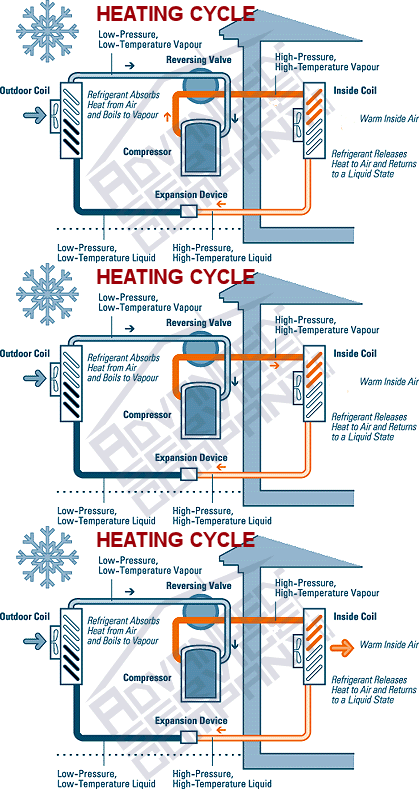
The Heat Pump operates in a reverse cycle in the Heating Mode. The Heat Pump uses the indoor coil as an condenser and the outdoor coil as an evaporator in the Heating Mode. The reversing valve is energized or de-energized based on the manufacturers specification to direct the flow of refrigerant to the appropriate coils. Whenever the outdoor coil, or evaporator section in the Heating Mode, detects ice formed on the coil, blockage of air through the coil, or senses a temperature usually around 42 degrees Fahrenheit or below - the Heat Pump will switch into Defrost Mode every 30, 60, or 90 minutes based on the settings on the Defrost Board. In the Defrost Mode - the Heat Pump will reverse cycle which will allow hot gas to enter the outdoor coil and defrost the coil. This will also make the indoor coil become cold and in turn to offset this temperature - the electric heat strips or auxiliary heat will come on. Also, the outdoor fan motor will stop during the Defrost Mode. A Heat Pump can absorb heat from ambient air down to absolute zero, -460 degrees Fahrenheit. The lower the ambient temperature - the lower the efficiency of the unit.
Efficiency of the Heat Pump
The Heat Pumps efficiency depends on the temperature of the outside ambient air. A Heat Pump can absorb heat from the outside ambient air down to a temperature of absolute zero, -460 degrees Fahrenheit. Heat Pumps are really efficient based on the fact that the Heat Pump uses the mechanical refrigeration system to remove heat from the outside ambient air. Electric resistive heaters use a vast amount of electricity compared to a Heat Pump in order to heat a home. Gas Units are efficient but the recent rise of gas and fuel prices make these units just as much or more expensive to operate than a Heat Pump.
A Note About Efficiencies: When you're getting ready to replace an older heating or cooling system, it's very important for you to get a Load Calculation done by your dealer/contractor. The greater the difference between the efficiency of your old system to the new system, the more likelihood that the dealer will recommend a smaller sized unit. This should not cause alarm, as the dealer, by running a Load Calculation, will be able to accurately size the system to the load in your home. It can be quite detrimental to equipment if the units are too large for the load in your home - they can start to 'short cycle' (they run often but for very short periods of time, because they are pumping out too much heat/cooling and reach the thermostat's setting too quickly), which can shorten the life of the unit dramatically.
Components of the Heat Pump
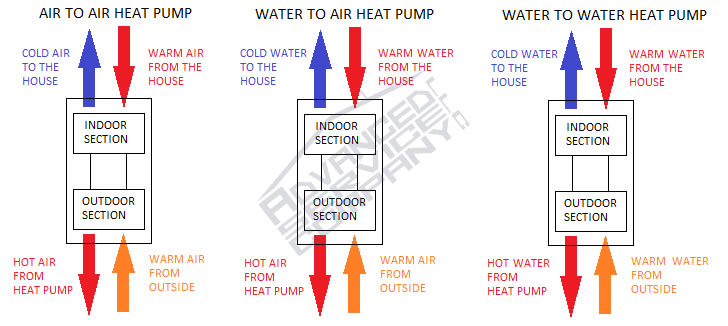
Heat Pump Transfer Mediums